

The world we live in
We’re living in a housing crisis. But what does it mean? Put simply, it means that there isn’t enough affordable housing to go around. We’re playing our part to put this right. Our current government has pledged to build 1.5 million new homes in its first five years, and here in south Liverpool, we plan to build 780 new homes throughout south Liverpool by 2032. This means that our communities will grow and change.
We’re listening
We’re here to listen, support, and make sure your voice is heard as we move forward together. We’re open to different viewpoints but we won’t tolerate racist or abusive language that goes against our values and makes people in our community feel afraid or unwelcome.
Building fair and welcoming communities
It’s natural to have questions when things shift, especially when new people move in and neighbourhoods grow. But here in south Liverpool, we believe everyone should feel welcome and be treated fairly. This helps build stronger communities, where people look out for each other. It’s what makes this city, and our part of it, great.
Homes for people who need them most
Hopefully by the time you’ve finished reading this, you’ll understand that our homes go to people who need them most – that there is a strong, clear, and fair process we follow every time someone applies for a home. Ready? Let’s talk facts.
The numbers
In numbers - the world we live in when it comes to deciding who gets our homes.
people on our waiting list (2024-25)
SLH homes allocated in 2024-25
of available homes went to people from L19, L24 and L25 in 2024/25
new SLH homes built by 2032, to address housing need
Our survey said…
Earlier in 2025 we surveyed our customers to find out how much you understand how we decide who gets our homes. Thank you to more than 500 of you who responded. Your feedback has been really helpful.

We found that:
- 74% of customers don’t know or only have a rough idea how we decide who gets our homes.
- Many believe things like immigration status or ethnicity influence who gets our homes, creating mistrust and a feeling of unfairness.
- Around half of you say you don’t get any information about who gets our homes.
- You said you wanted clear, simple, visual guides on how the process works.
We hope that this page starts to deal with some of the issues our survey has highlighted. But we want to go further and change how we talk to you about who gets our homes, so everyone who is applying for a home or on the waiting list is informed.
How we allocate homes
We decide who gets our homes based on need, not ethnicity or immigration status.
When you apply for a home, you join a waiting list, based on the date you applied.
Your position on the waiting list is impacted by a number of things, such as:
- Your connection to the local area – e.g. schools, work, family
- If you’re living in an overcrowded home
- If you or a family member has medical needs
- If you’re experiencing hardship or welfare issues
- If you’re facing homelessness
- If you’re experiencing anti-social behaviour or hate crime
Full details of how we prioritise your application can be found here

Did you know? In 2024, over 70% of our available homes went to people from the immediate area.
- Lettings information from 2024-25
New homes vs existing homes
How we allocate homes is different, depending on whether they’re new homes, or existing homes.

How we work with Liverpool City Council
South Liverpool Homes was formed in 1999 when Liverpool City Council transferred homes in Speke and Garston to us. Because of this, we have a duty to work with Liverpool City Council when we allocate homes to people.
Existing homes
When existing homes becomes available, half go to people on our waiting list, and half go to people put forward by Liverpool City Council.
New homes
For new homes, we work together with Liverpool City Council to make sure they go to those who need them most. The process can change depending on the type of housing development. Sometimes all the nominations come from the council, however in most cases we agree on a split. No matter what happens, we oversee each application to create sustainable communities.
Local Lettings Plans
Sometimes, when we build new homes, we use Local Lettings Plans. This means we work with the council to decide who gets these homes, to help build a strong community. If we do this, we’ll let you know on our website.
The law
Housing associations in the UK have to follow the law when giving out homes. This means our processes must be fair, help people most in need (like those who are homeless or living in bad conditions), and avoid discrimination. There are rules they must stick to, so everyone gets treated properly and knows how decisions are made.
Frequently-asked questions
How we decide who gets a home.
Our allocations are based on a clear policy that prioritises people in greatest housing need. We follow national guidelines and work closely with Liverpool City Council to ensure fairness.
We prioritise local people, but we also have legal duties to help those in urgent need - including people fleeing domestic abuse or homelessness. Every case is assessed individually.
No. Who gets housing depends on need, eligibility, and local housing policies. The vast majority of social housing in the UK is given to British citizens, and SLH has provided homes to thousands of local people. In 2024, over 70% of our available homes went to people from the immediate area.
No group is automatically prioritised. We assess need based on housing circumstances, not ethnicity, nationality, or religion.
We get you. People are waiting too long for an SLH home, and you’re not alone. People across the country are facing the same challenge as demand for homes outweighs supply.
In 2024/25, more than 2,000 people were on our waiting list, but only 179 homes became available. We prioritise those in greatest need and those who want to stay in their local area. However, the reality is that you are likely to wait a long time for a home unless you have an urgent need.
That’s why we’re aiming to build 780 new homes by 2032. To help people move into an SLH home quicker.
We use a priority system that can move your application forward by six months, one year or three years, depending on your situation. This means your position on the list moves higher. It’s similar to the council’s banding system.
- You’ve got strong local ties to L19, L24 or L25
-
You’ve had a tenancy before and managed it well
-
Your current home isn’t suitable
-
You’re dealing with hardship or welfare issues
-
Your home is overcrowded
-
You’ve had a relationship breakdown
-
You’re working, volunteering, studying or training near SLH homes
-
You’ve got medical needs that mean you need to move
-
You’ve experienced anti-social behaviour
- You’re homeless or at risk of homelessness
- You’ve recently left the armed forces
- You’re under-occupying your current home
- Your home is seriously overcrowded (missing two or more bedrooms)
- You need to move because of regeneration
- You’re at risk due to domestic abuse, hate crime or serious anti-social behaviour
Yes. You don’t have to be out of work to rent a home with us. Many of our customers are in employment. Applications are assessed based on housing need and whether someone can reasonably access suitable housing on the private market, not on whether they work or claim benefits.
Mythbusters
Based on our surveys, what we hear from our customers and see on social media, we’ve put together this guide to help you bust the myths around who gets our homes and do your bit to help combat misinformation in our communities.
Fact: Our policy follows legal and regulatory requirements and is based on clear criteria such as housing need, length of time on the waiting list, local connection, and other factors. The process has been scrutinised by tenants and is designed to be fair, transparent and consistent for all applicants.
Fact: We let homes according to need and eligibility, not background or certain groups of people. Local connection is one of the factors considered, and all applicants are assessed using the same criteria. In 2024, over 70% of our available homes went to people from the immediate L19, L24 and L25 areas.
Fact: Knowing someone at SLH does not influence who get a home with us. Every application is assessed fairly and in line with our published policy, which follows legal and regulatory requirements.
Fact: Homes are allocated based on need, waiting time, local connection and other transparent criteria - not nationality or place of birth. Local families are not deprioritised.
Fact: We contact applicants every 12 months to see if they still require a home and if their circumstances have changed. We are working to improve communication with applicants about their status and how the process works. Average waiting time for homes are posted on our website. You can always contact us for information.
Fact: Fairness and inclusivity are at the heart of everything we do. In fact, it’s one of our five values. Our policies are regularly reviewed to make sure everyone is treated fairly, and we welcome feedback to help us improve.
Fact: We match homes to household size and need as closely as possible, following legal and regulatory requirements to make the best use of available housing. Homes with additional bedrooms may be allocated to families with caring responsibilities, additional medical needs or who have shared parental responsibilities.
Fact: We carry out regular checks and take action if tenancy rules are broken. We encourage residents to report concerns so we can investigate.
Fact: We value your feedback and use it to improve our services. We regularly consult with residents and are always open to questions and suggestions. Our tenant Scrutiny Panel has recently completed a review of how we let our homes, and we are taking their feedback on board to improve the service.
Real-life case studies
There’s a lot of demand for social housing in south Liverpool and not enough homes to go around. People often ask, “Who gets a home?” The answer is simple: it’s based on need, not ethnicity or background.
Priority is given to those facing overcrowding, homelessness, medical needs, a strong local connection and many other reasons. These six real-life journeys show how many people wait years for the right home, and how life-changing it can be when they finally get the keys.
- Anita – single parenting in a severely overcrowded home
- Sarah – ‘life changing’ move gives family the space to thrive
- Kemal – from temporary accommodation to secure family home
- Catherine – Existing SLH tenant moves to a more manageable and accessible home
- Elizabeth’s move to independent living creates opportunity for another family
- James – single dad finds a home to bring his family together

Single parent Anita applied for a two-bedroom home in Speke for her and her child in 2022. At the time, they were living with their extended family in a significantly overcrowded home, resulting in limited privacy and personal space.
Upon assessment, Anita’s application was backdated by three years due to severe overcrowding. In 2025, Anita was matched with a suitable home in Speke which she accepted. She moved in in June 2025, is now settled in her new home and has sufficient space for her and her daughter.

Mum of two, Sarah, applied for a three-bedroom home in Garston in 2019. Both her children have additional needs and requires separate bedrooms to meet their needs.
Because of their medical needs, her application was prioritised by a year. This recognised that the family had already spent time living somewhere that didn’t suit their medical and development needs.
Staying in Garston was also important for Sarah, to maintain existing support networks, stay close to schools and stick to routines that work best for her children. In August 2025, a new-build home became available that perfectly matched Sarah’s requirements: the right size, the right layout, and - most importantly - within her chosen area to keep essential routines intact for her children.
Sarah was successfully matched and moved in December 2025. Sarah described the move as “life‑changing.” Each child finally had their own bedroom, giving them the space, comfort, and the calm environment they need. The family now has a safe, modern home where their children can thrive.

Kemal and his family applied for a home in 2023, during a period of immense uncertainty. They had been assessed by Liverpool City Council as statutory homeless and were placed in temporary accommodation within a family hostel. Despite the challenges of living in a shared environment with limited space and privacy, the family remained hopeful that a permanent home would soon be within reach.
The family’s application was awarded a three‑year priority backdate, moving them higher up the list, recognising the significant length of time they had already spent without a secure and suitable place to live. Their circumstances meant they required either a three‑bedroom parlour house or a four‑bedroom home, both of which are in short supply. As a result, the family faced a longer wait while continuing to live in temporary accommodation.
In February 2025, a rare opportunity arose - a three-bedroom parlour house became available. As soon as the keys were returned, Kemal and his family were invited to view the home where they gladly accepted the offer - a significant turning point after years of uncertainty.
However, before the family could move in, essential work on the home was needed. The previous tenant had refused improvements so extensive refurbishment was needed, including upgrades to improve its energy efficiency, ensuring it met modern standards and would provide a warm, cost‑effective home for the family.
When the renovations were completed, Kemal and his family received the keys to their new home - a place where each member of the family could finally have space, privacy, and stability. Moving out of temporary accommodation marked the end of a challenging chapter and the beginning of a brighter, more secure future.

Catherine was already an SLH tenant when she originally applied for a transfer in June 2017, when deteriorating health meant that she needed a bungalow. She applied for medical priority, and her application was backdated one year.
However, when her adult son moved out, Catherine was left living alone in a home that was now too large for her needs. Recognising this change, her priority was upgraded due to under occupation and was backdated by three years.
Catherine moved into her bungalow in 2025, a move that not only met her health requirements but also provided a more manageable and comfortable living environment for the future.
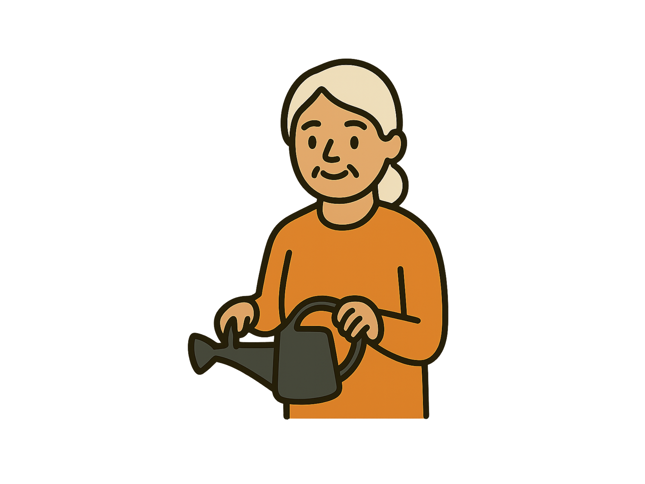
Elizabeth had been living alone in a three-bedroom SLH home, which had become too large for her needs. In December 2023, she applied for a transfer to one of our independent living apartments in Woolton, as managing the stairs was becoming increasingly difficult.
Her application was backdated by three years due to under-occupation, recognising that her current home was no longer suitable. In September 2025, Elizabeth viewed and accepted a ground-floor flat, perfectly meeting her requirements for accessibility and comfort.
The move not only improved Elizabeth’s quality of life but also allowed us to allocate her former home to a family experiencing overcrowding, helping two households find the right fit for their needs.

James, a single father with full custody of two children, applied for a home in August 2020 following the breakdown of his relationship. To keep his children together, James moved back into his parents’ three-bedroom home. Under our policy, this arrangement was not considered overcrowded, as the household had sufficient bedrooms for James and his two children.
During the application process, James became a father to a third child, whom he had access to with regular overnight care. This changed his housing requirement from a two-bedroom to a three-bedroom home.
James’ circumstances presented a challenge: while not technically overcrowded, he provided medical evidence showing that his current living arrangements were negatively impacting his health. He was awarded medical priority, and his application was backdated by one year. He also wanted to remain in the same area, so he could maintain his relationship with his parents, and wider family.
In November 2025, James successfully secured a three-bedroom home in his preferred area. This case highlights the complexities of housing allocation, where custody arrangements and medical priorities intersect with standard overcrowding criteria.
In November 2025, James got a three-bedroom home in the area he wanted. His situation shows how finding a home can be complicated, as it involves things like child custody, health needs, and the standard rules about overcrowding.